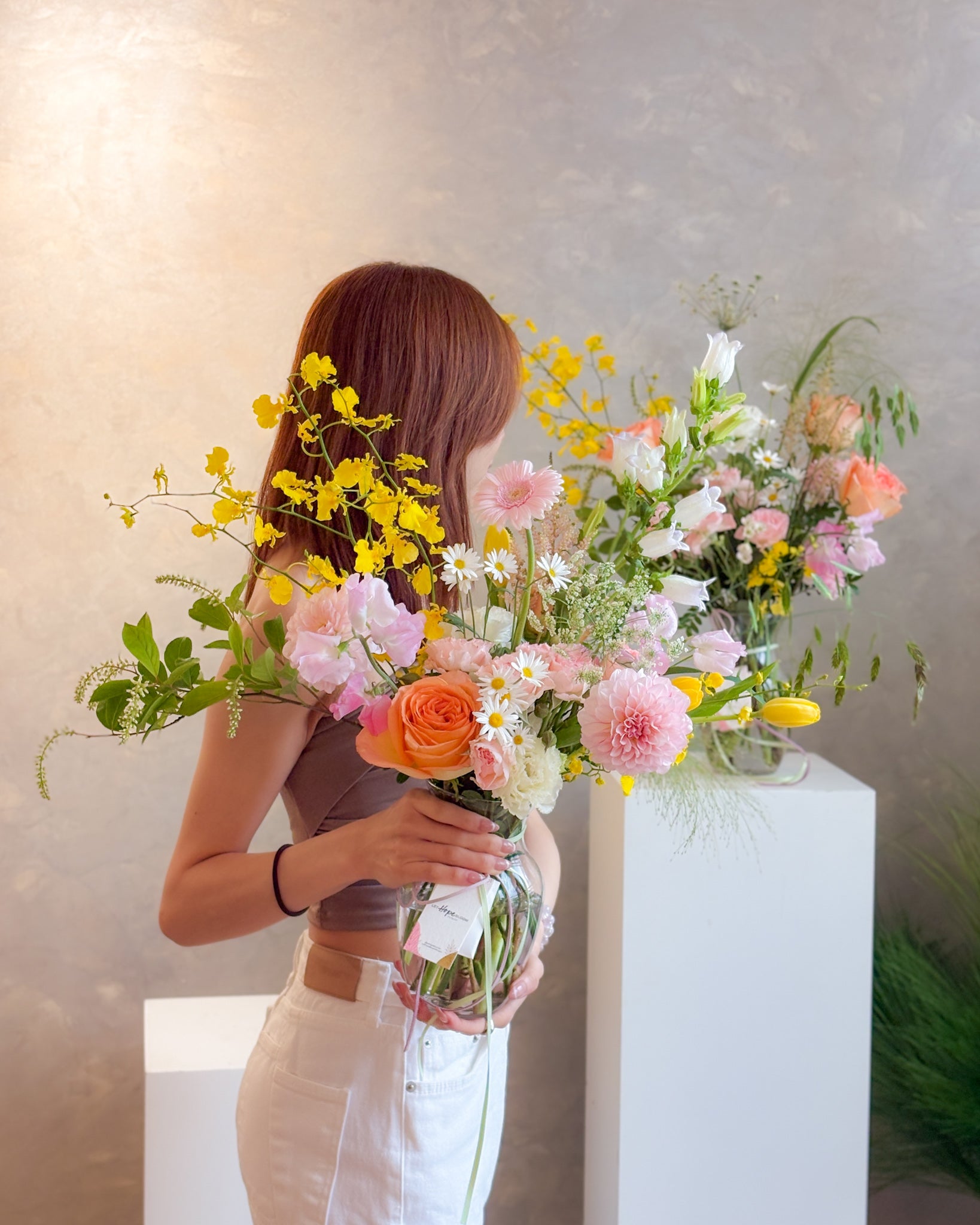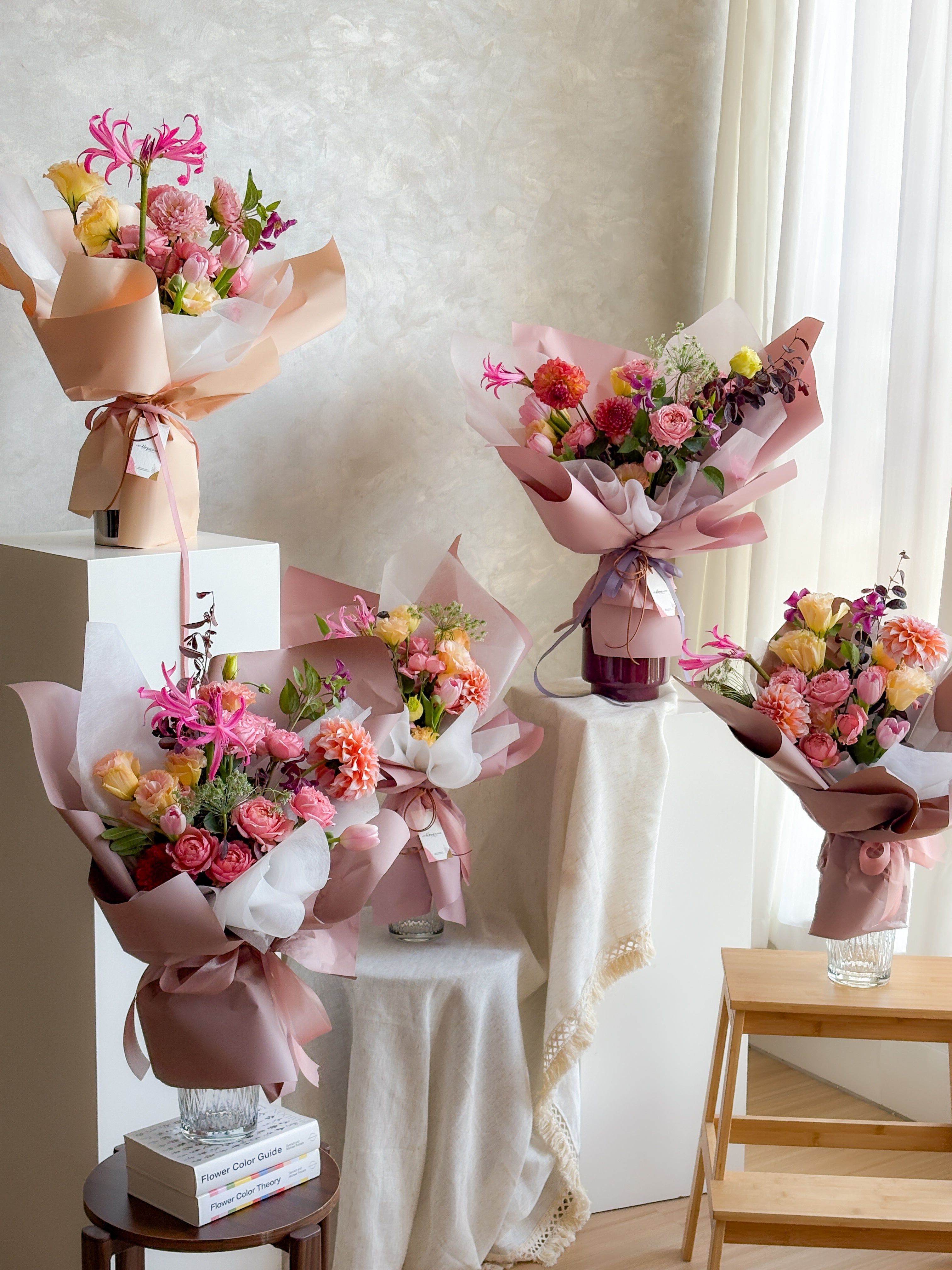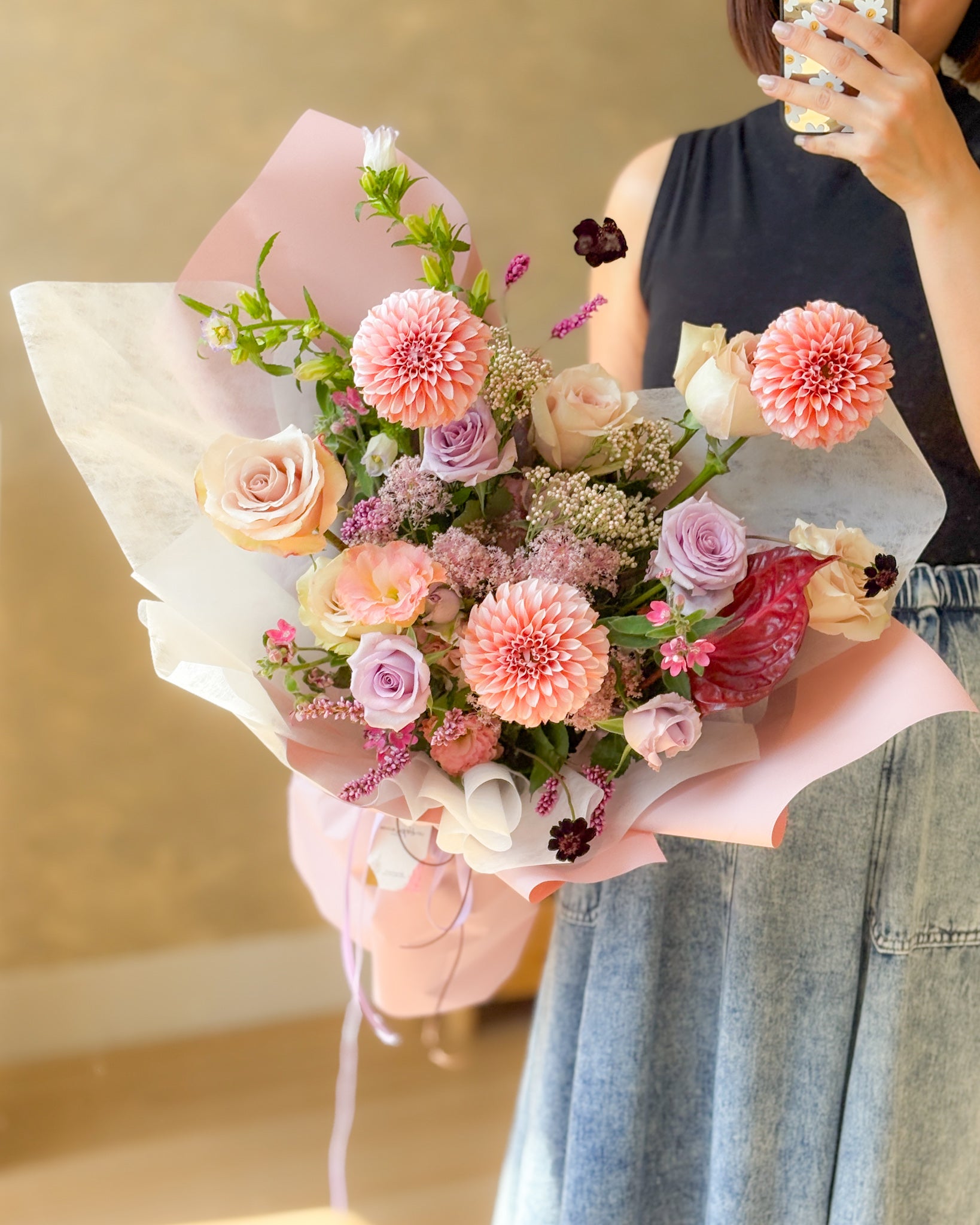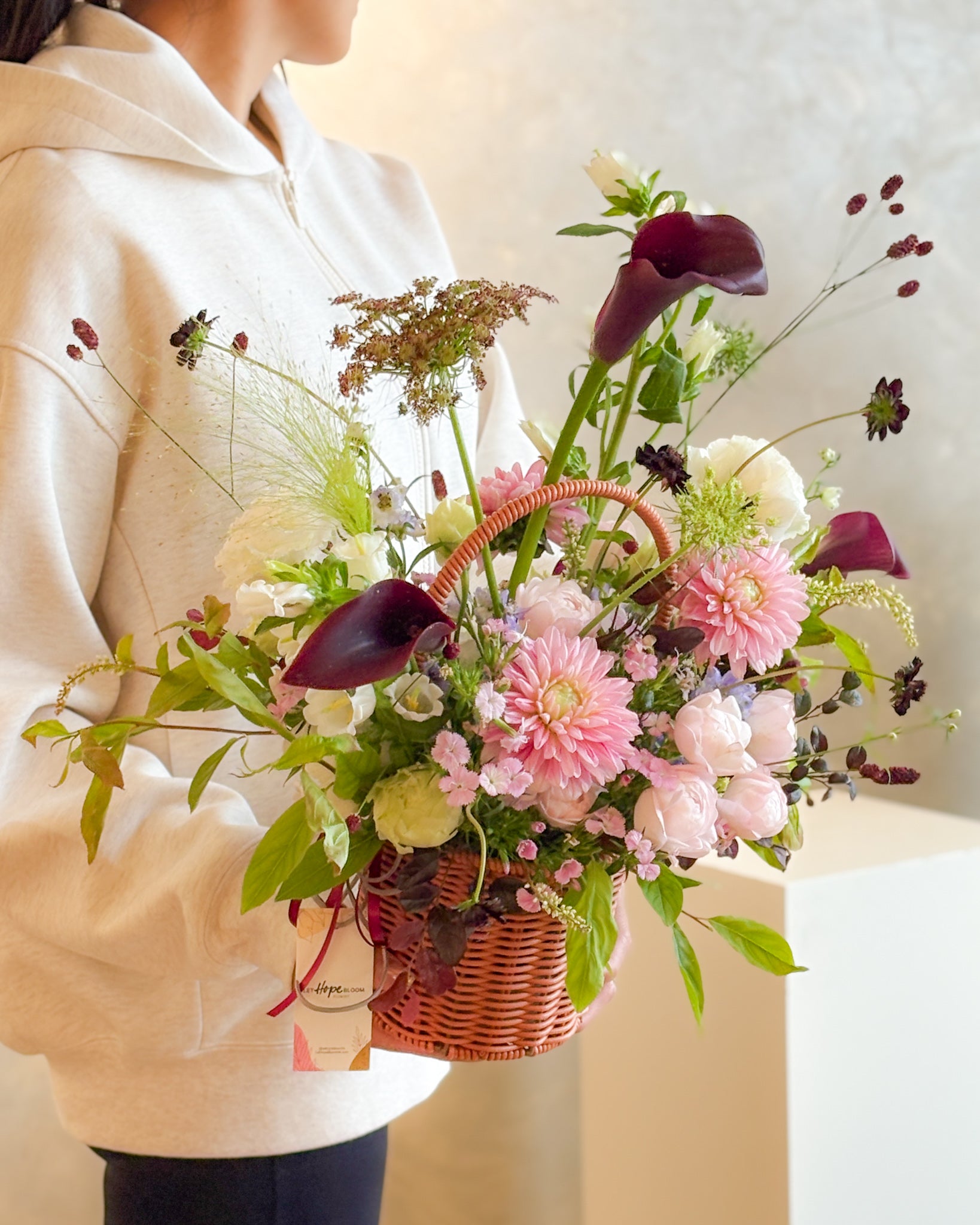

Article: Floral Design Knowledge Series | Four Common Design Blind Spots for Beginner Flower Arrangers
Floral Design Knowledge Series | Four Common Design Blind Spots for Beginner Flower Arrangers
You carefully selected several favourite flowers and followed the instructions diligently. You placed the flowers in the vase, then stepped back to look at the finished arrangement. Somehow, it just felt a little off.
Most people who learn flower arranging have experienced the feeling that “something just doesn’t look right.” The flowers may not have been chosen incorrectly; the problem more often lies in several design blind spots.
These are the four design pitfalls that beginners most often encounter.
1. Using Too Many Types of Flowers: The Arrangement Loses Its Focus
Why Does Using Too Many Types of Flowers Make an Arrangement Fail?
When entering a flower market, you are faced with an overwhelming choice of different floral materials. A beginner’s instinct is to “choose several more types so the arrangement will be richer,” but the opposite is actually true.
When an arrangement contains too many “main characters,” each type of flower competes for attention, making the overall focus more scattered.It will look like a pile of flowers crowded together, and the sense of abundance will be lost instead.
How to Adjust?
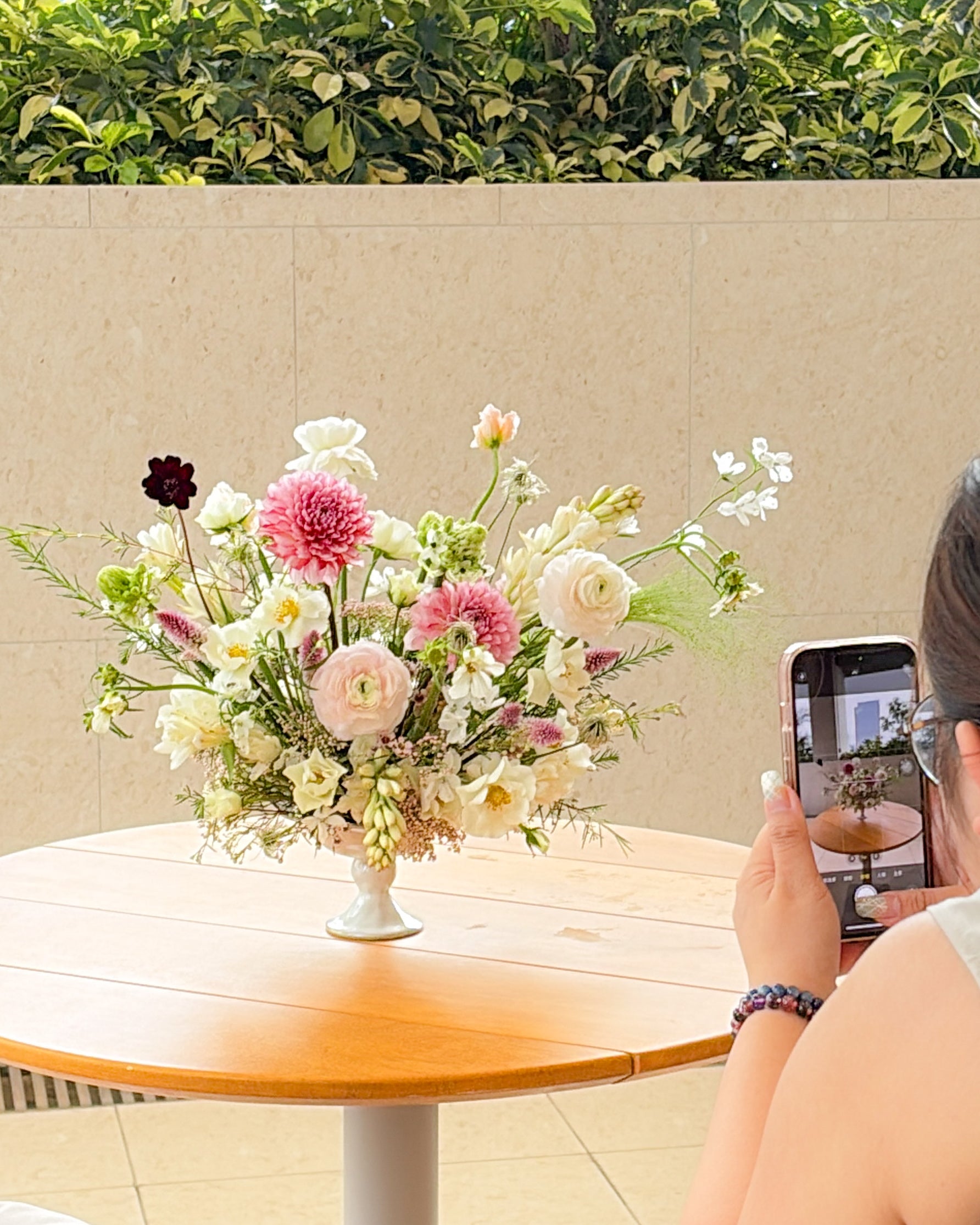
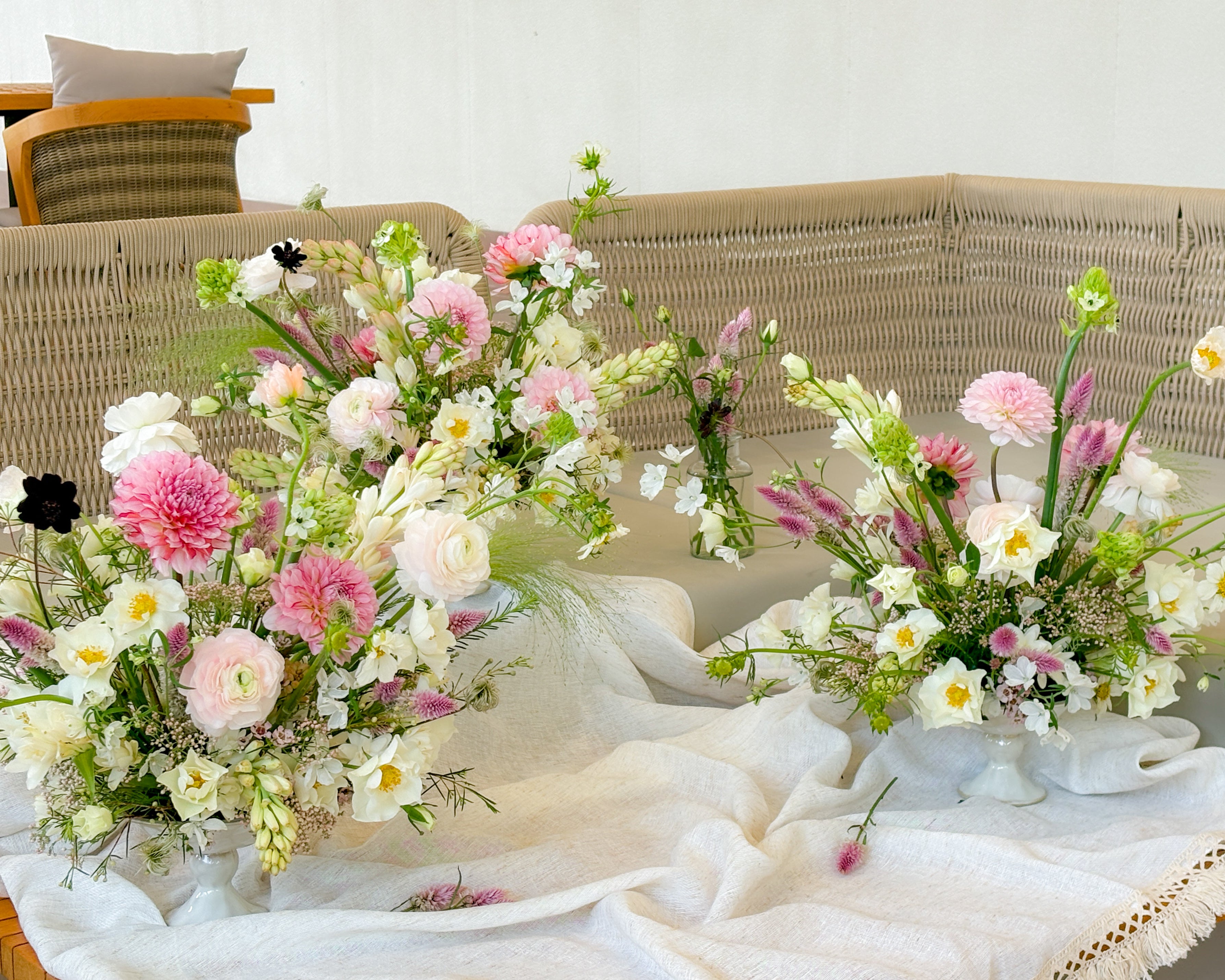
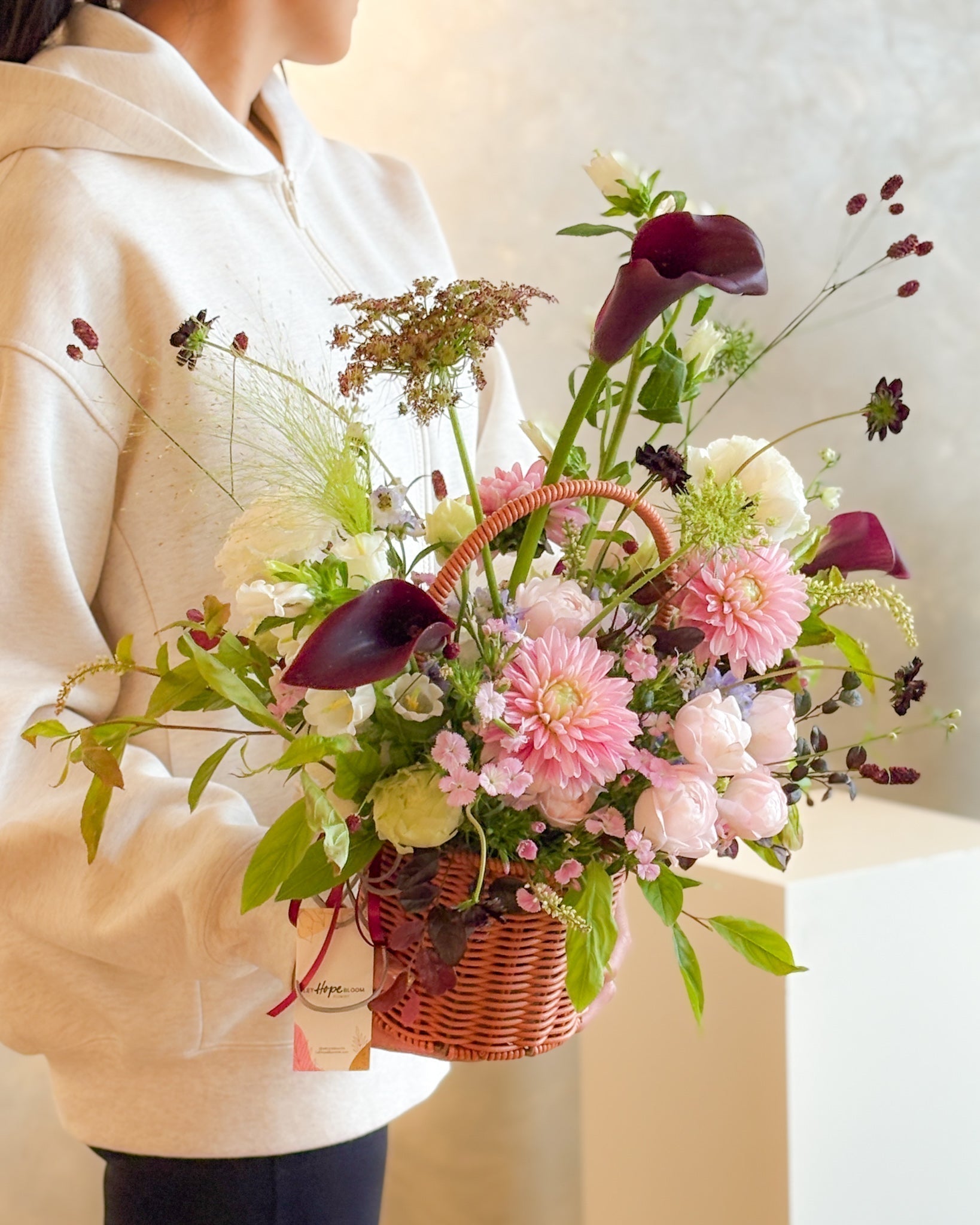
Strictly limit each design to one or two types of focal flowers (Focal Flower). We recommend choosing flowers with full forms and clear outlines as the visual focus, such as:
-
Rose
-
Peony
-
Gerbera
-
Dahlia
Use light, airy filler flowers (Filler Flower) and foliage for the remaining materials, allowing them to support rather than compete with the focal flowers.
In floristry, people often say Less is More, but it is the hardest principle to put into practice.

2. Ignoring Contrast in the Texture and Form of Flowers: The Arrangement Lacks Visual Impact
Why Does “Uniformity of Form” Make an Arrangement Look Monotonous?
When choosing materials, many beginners tend to select flowers with similar shapes, believing that “neat and uniform” means “beautiful.” In reality, if all the flowers in an arrangement are too similar in form and texture, the overall result will look flat and lifeless.
Good contrast is often very specific: pair round forms with long ones, and thick textures with delicate ones. For example, place a line flower beside a spherical bloom, or leave some light, airy foliage next to flowers with thick petals.
How to Adjust?
Consciously choose flowers from three different form categories to create a three-dimensional visual structure:
-
Mass Flower: Peony, Hydrangea, Rose
-
Line Flower: Snapdragon, Gladiolus, Delphinium
-
Light Filler Flower: Panic Fountain, Daisy, Astillbe
When the three forms are placed together, the eye has somewhere to move instead of stopping on a single shape.

📌 About Colour Combinations: Floral colour combinations are another independent design topic involving the 60-30-10 colour scheme principle and colour wheel theory. If you would like to learn more, please read the feature article on colour combinations in this series.
3. Insufficient Height Variation: The Arrangement Becomes Flat
Why Do Equal-Length Stems Make an Arrangement Fail?
If the stems are cut to the same length, the flowers will line up in a row. From the front, they will look as if they are stuck onto a sheet of paper, with no front-to-back depth.
The professional approach is straightforward: create a clear difference in height. Position some flowers higher and others closer to the vessel opening,Some flowers should be positioned higher while others should sit close to the vessel opening, so the arrangement has front-to-back layers when viewed from the front (3D Volume).
How to Adjust?
Odd Number Rule: Arrange flowers in groups of odd numbers—three, five, or seven stems per group. Odd-numbered groupings look more like natural growth and feel more balanced and full than even-numbered arrangements.
Deliberately Create Height Differences: Decide which flowers will serve as the “High Point,” rising above the overall height, and which will serve as bottom fillers, positioned close to the edge of the vessel. The difference in height between the two is precisely what creates the arrangement’s three-dimensional quality.

4. Ignoring Overall Proportions: Visual Blind Spots Throw Everything into Disarray
Why Is the “Working Angle” a Trap for Beginners?
When arranging flowers, people often become deeply immersed in the details of trimming each stem. This focus also creates a blind spot: an arrangement that looks good from the working angle may appear top-heavy from the front, while carefully selected focal flowers may be growing toward the ceiling instead of facing the viewer.
How to Adjust?
The 1.5 Golden Ratio: The overall height of the flowers should be approximately 1.5 times the height of the vessel. This ratio is widely used in the industry: it avoids looking cramped and heavy while also preventing the arrangement from appearing top-heavy, making it the most reliable starting point for beginners.
Mirror Check: When the arrangement is nearly complete, move it in front of a mirror and observe the overall proportions from the front. Confirm that the faces of the focal flowers point directly forward, and that the height levels are clearly visible from the front.While working, you see the arrangement from the side and above; only a mirror (or a phone photo) shows the front that the customer will see. Another method is to take a photo with your phone camera to see whether there are any blind spots that need adjusting.
A good arrangement is not determined solely by how expensive the flowers are. You need to be willing to choose fewer types of flowers, step back to view the overall arrangement, and turn the focal flowers toward the side that viewers will actually see.
Before your next arrangement, just check these four points first.

Floral Design Course
Want to systematically learn floral design under professional guidance? Learn more about Let Hope Bloom floral courses, personally led by Clara and taught in small groups at a studio in a Grade A commercial building in Kwun Tong. Classes are available in Cantonese, Mandarin, and English.