
【The Golden Ratio of Floral Design】3 Essential Flower-Arranging Rules and Preservation Methods for Beginners: A Beginner’s Guide to Flower Arranging in Hong Kong
Many flower-arranging beginners believe that creating a professional-looking arrangement requires exceptional talent.
In fact, floral design is essentially a practical science combining “geometric spatial aesthetics” and “plant physiology.” Master these three principles, and even beginners can create surprising arrangements at home from their very first attempt.
I. How Should You Calculate the Proportion Between the Vase and Flower Bouquet? Breaking Down the “Golden Geometric Proportions” of Flower Arranging
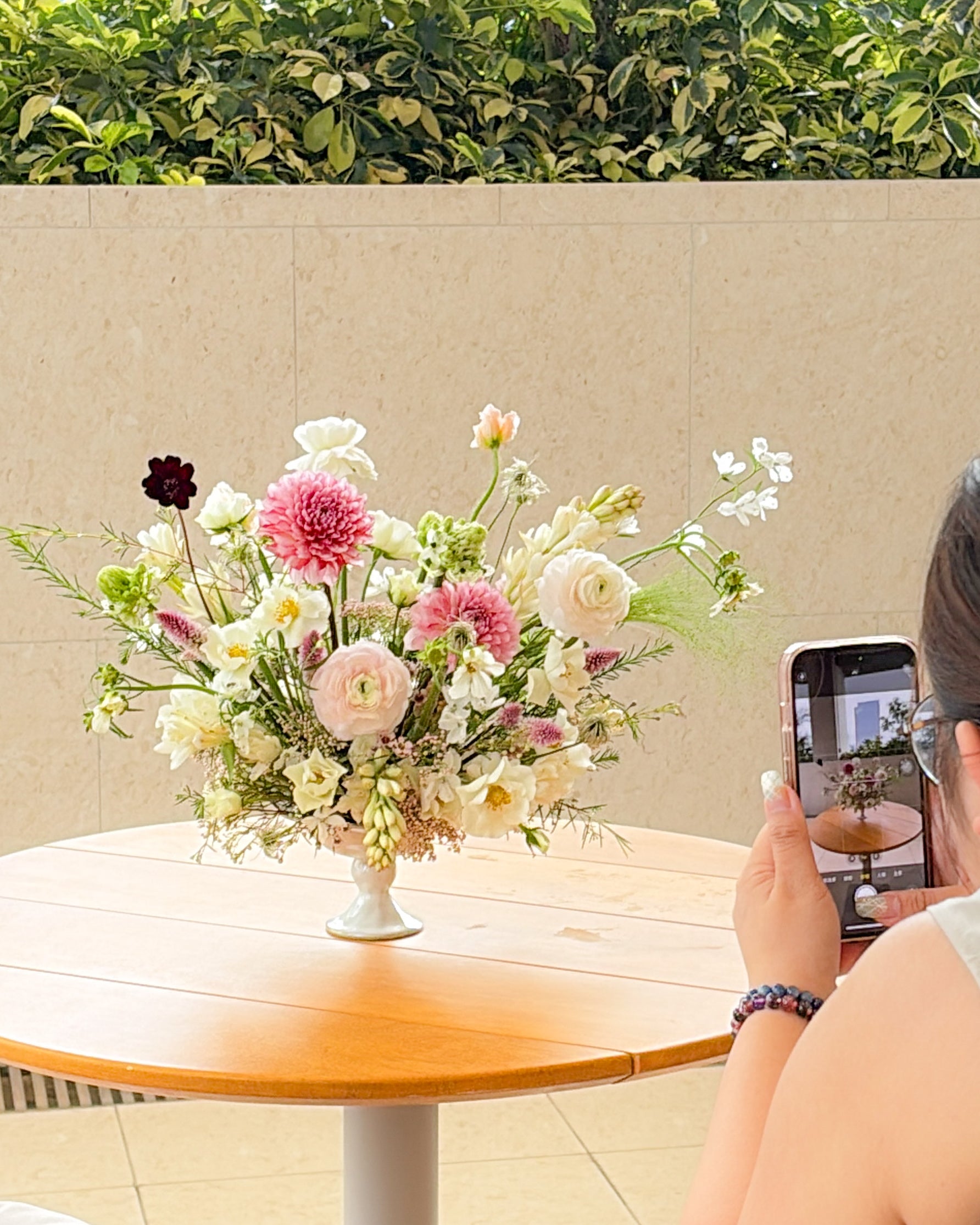
Mastering the proportion between the vase and Flower Bouquet is key to achieving a professional look in flower arranging.

Rule 1: The “1.5-to-2-times golden rule” for height
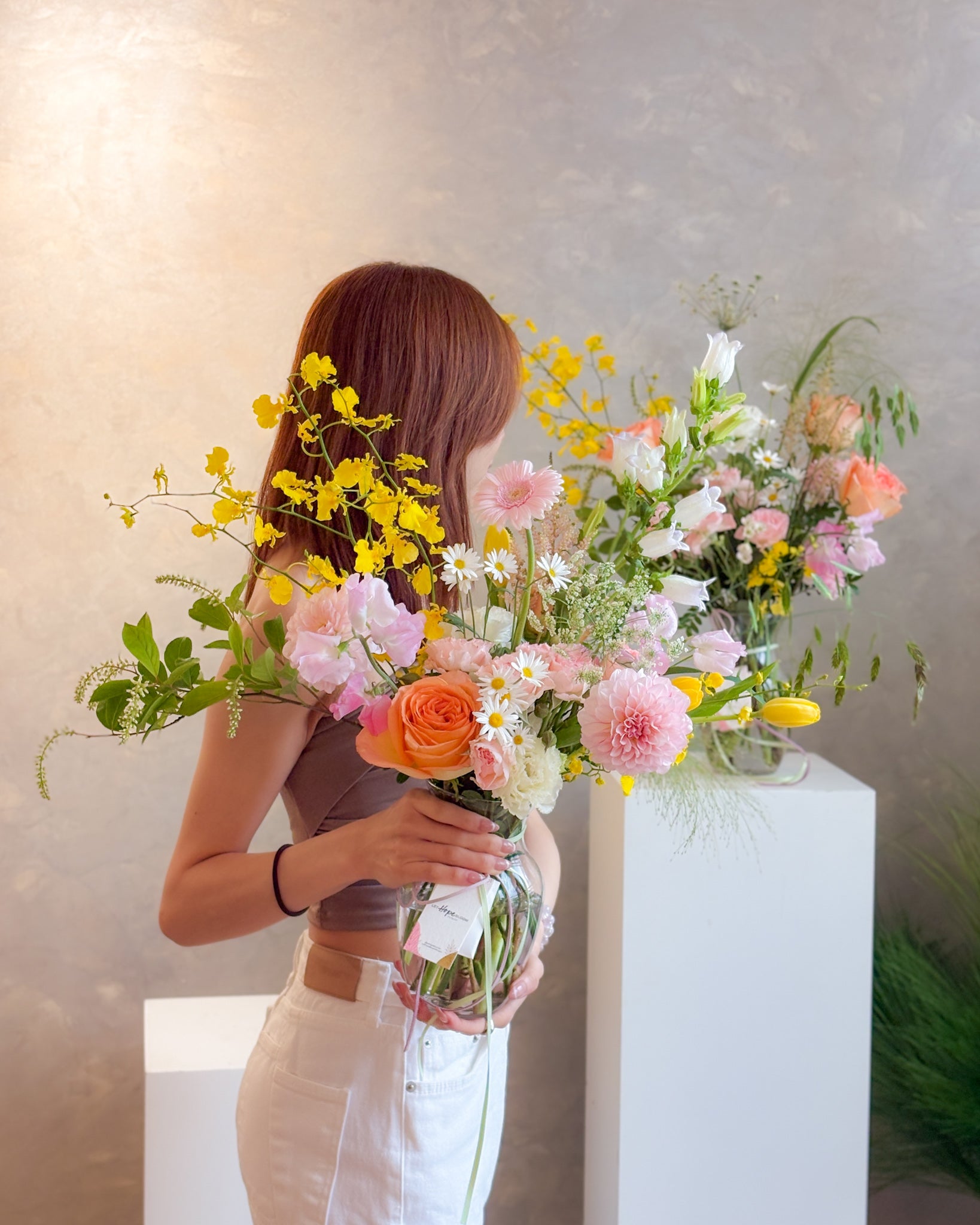
Ideally, the Flower Bouquet should extend 1.5 to 2 times the height of the vase.
Practical example: If using a 12-inch-tall vase, the ideal height for the Flower Bouquet should be between 18 and 24 inches. A Flower Bouquet that is too short will look flat, while one more than twice as tall can easily lose its centre of gravity and look awkward.
Rule 2: Width should not exceed “1.5 times the diameter of the vase opening”
To maintain visual stability, the widest part of the Flower Bouquet should ideally not exceed 1.5 times the diameter of the vase opening.
Rule 3: The shape of the vase should work together with the design style
- Tall, narrow cylindrical vase: Suitable for long-stemmed flowers (long-stemmed roses, eucalyptus leaves), maintaining a vertical, modern feel.
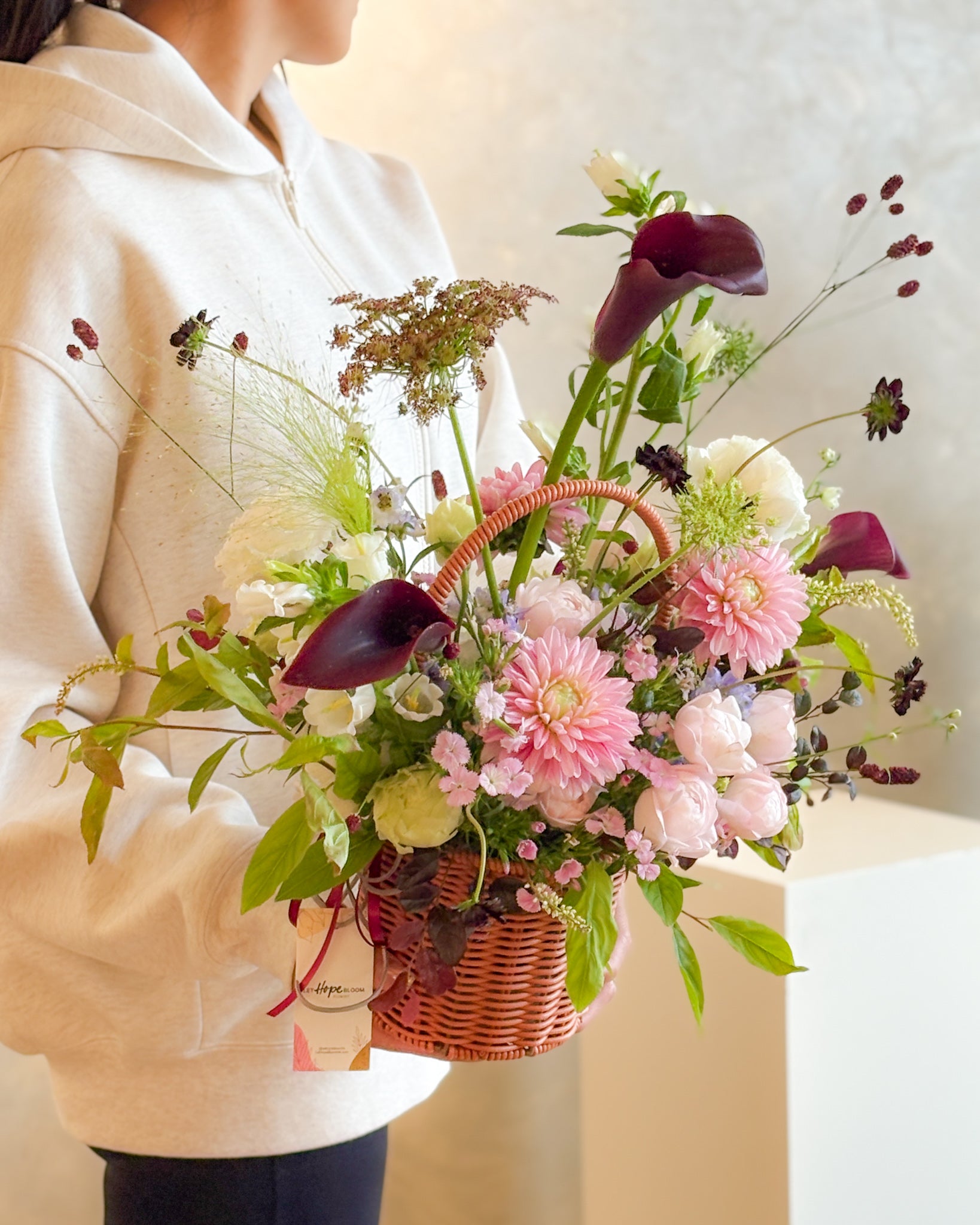
- Short, wide container: More suitable for a full, round Flower Bouquet, using filler flowers to create volume.
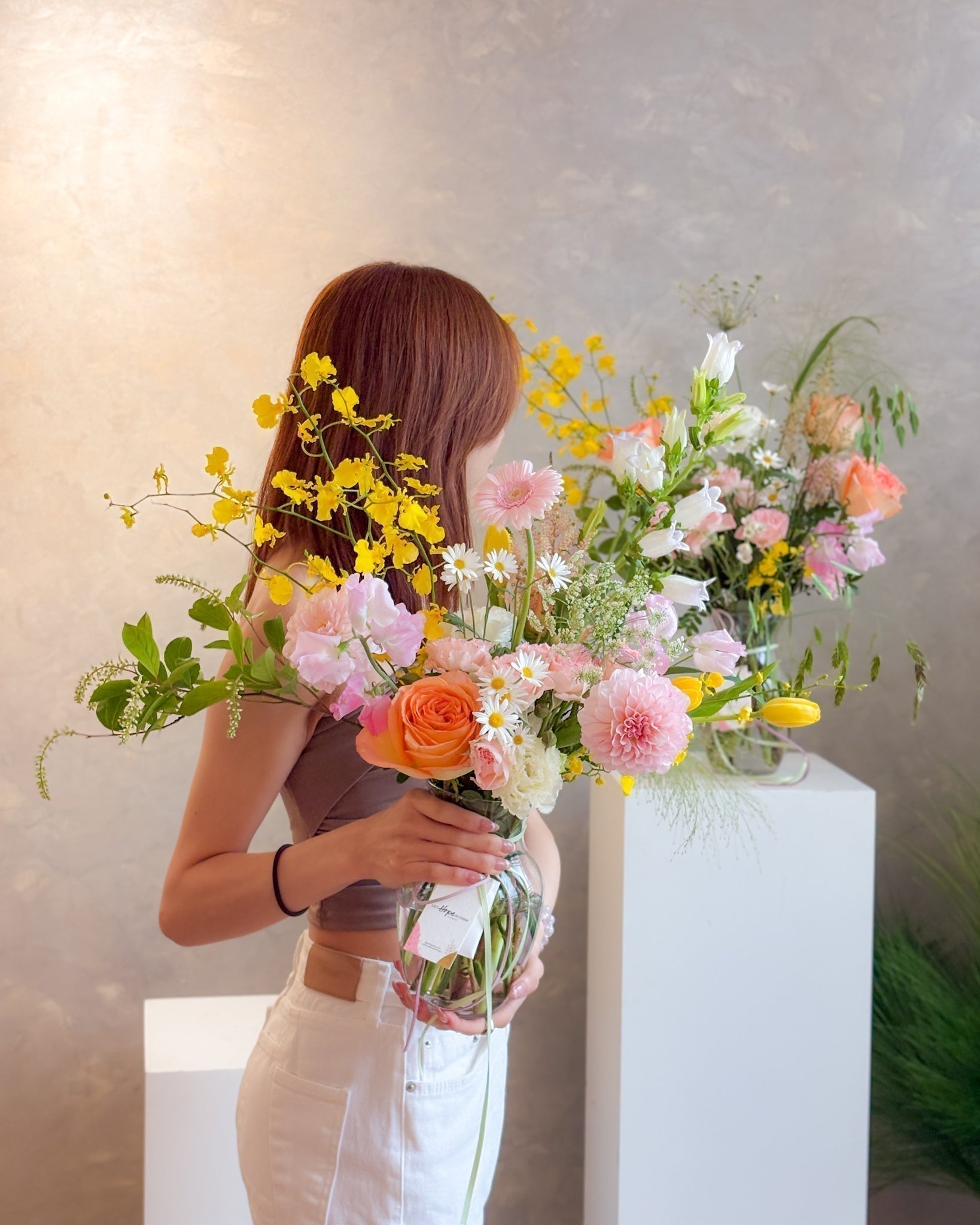
- Curved-neck hourglass vase: We recommend pairing it with a slightly conical Flower Bouquet, with the height controlled at 1 to 1.5 times the height of the vase so that the lines naturally echo the shape of the vase.
II. How Should You Arrange Flowers to Create a Sense of Depth? The “Four Major Flower Forms” and High-, Medium-, and Low-Level Layering
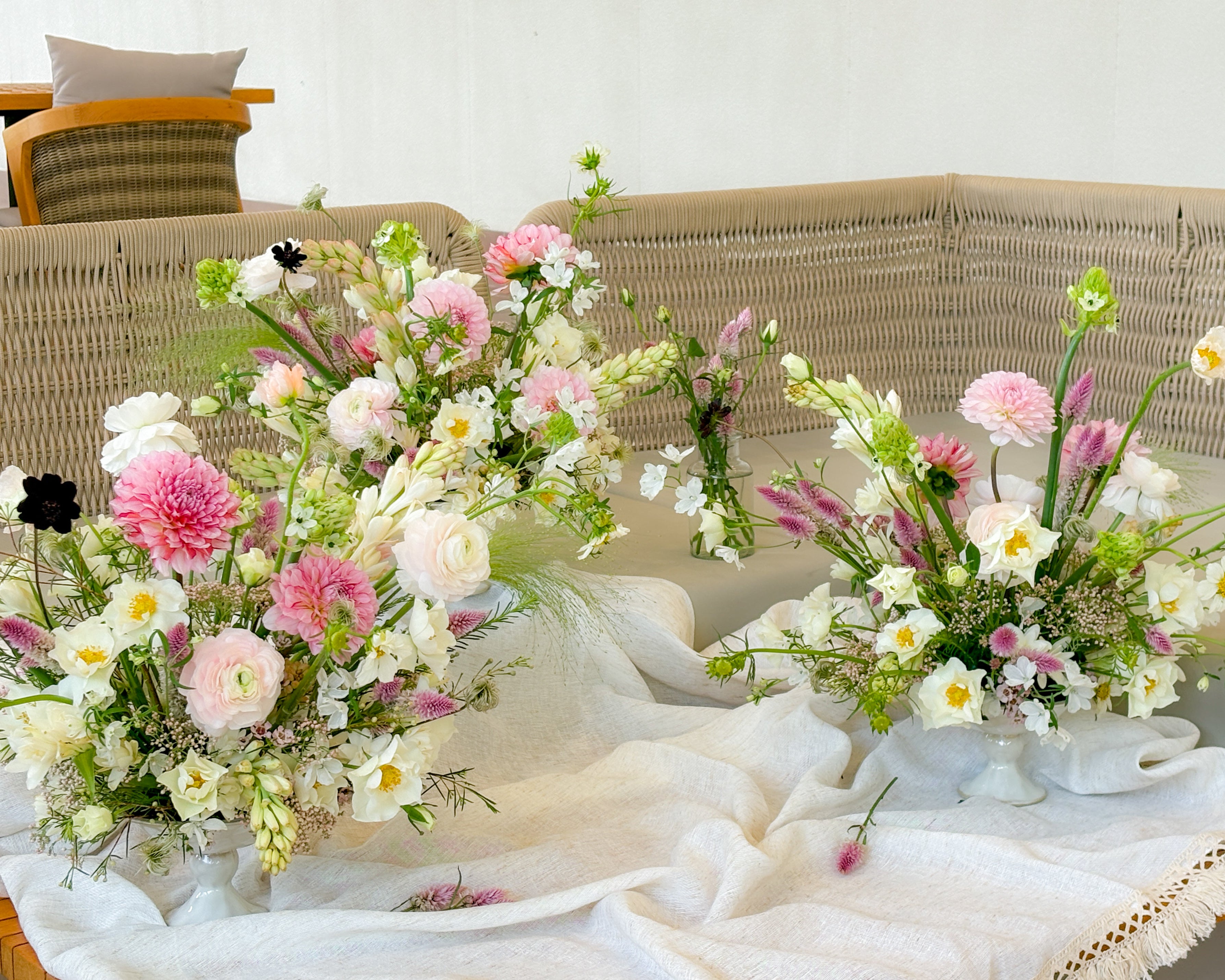
To make a flower arrangement look three-dimensional and full of depth, arrange the flowers in high, medium, and low layers according to their spatial and geometric properties:
| Flower form | Spatial function | Common Representative Flowers |
|---|---|---|
| Line | Outline the arrangement’s overall contour and define its height and width; they form the framework of the entire arrangement | Delphiniums, snapdragons, gladiolus, dancing orchids, bellflowers |
| Form | Distinctive flowers with a strong presence, placed at the visual focal point | Lilies, sunflowers, anthuriums, birds of paradise, orchids, amaryllis, calla lilies |
| Mass | Round or block-shaped flowers that fill the space between line flowers and form flowers, creating volume and weight | Roses, carnations, hydrangeas, gerberas |
| Filler | With many branches and small flowers, they fill gaps and create a sense of airiness and layering | Pompons, chamomile, delphiniums, fountain grass, sweet peas |
Professional Flower Arrangement Steps
- Outline the framework: Start by inserting line flowers to establish the arrangement’s height and geometric outer contour.
- Establish the visual focal point: Insert 1 to 2 of the most eye-catching form flowers near the golden-ratio point above the mouth of the vase to stabilise the visual centre of gravity.
- Layered filling: Distribute mass flowers and filler flowers according to a high-, medium-, and low-level strategy. Place smaller, lighter buds higher up or along the outer edges, while larger, darker, heavier-looking flowers go lower and toward the centre.
- Crossed-stem technique: When arranging flowers in a vase, interweave the stems inside the container to form a stable, three-dimensional interlocking grid, allowing the branches to support one another and preventing the arrangement from tilting or collapsing.
Once the proportions have been calculated and the layers arranged, the next step is colour coordination. We have already explained this in detail in the article 《Floral Colour Theory: The 60-30-10 Rule, a Beginner’s Guide to Flower Arranging in Hong Kong》. Proportion and colour coordination are, in fact, two sides of the same logic in flower arranging.
III. How Can You Keep Fresh Flowers Fresh for Longer? The Scientific Preservation Techniques Florists Use
Creating a beautiful arrangement also requires proper post-harvest care to extend the display life of cut flowers.
-
Remove leaves below the waterline: Be sure to remove all leaves submerged in water to prevent them from rotting, breeding bacteria, and damaging water quality.
-
Cut the flower stems at an angle in water: In water, cut 2 to 3 cm off the bottom of each stem at a 45-degree angle. Trimming in water prevents air from entering the vessels and forming air bubbles that obstruct water transport, while the angled cut maximises the water-absorbing surface area.
-
Homemade flower preservative:
-
White vinegar: Add a few drops of vinegar to the water to lower its pH to mildly acidic levels and inhibit bacterial growth.
-
Diluted bleach: Add 3 to 5 drops per litre of clean water to effectively prevent the water from developing an odour.
-
Coins: Placing it in the vase can help inhibit bacterial growth.
-
Sprite: Dilute with 1 to 2 parts water to provide the sugars and nutrients needed by cut flowers.
-
Environmental control: Place flowers in a cool, well-ventilated area (15°C to 23°C, with humidity around 60%), avoiding direct sunlight, air-conditioning vents, and hot, dry areas. Do not place them together with fruits such as apples and bananas, as ethylene gas can accelerate wilting.
Behind the theory lies the accumulation of hands-on experience
Proportion, layering, and flower preservation are the fundamentals of flower arranging.
But there is always a gap between knowing the principles and theory and creating the golden ratio with your own hands. Theory and hands-on experience are ultimately two different things.
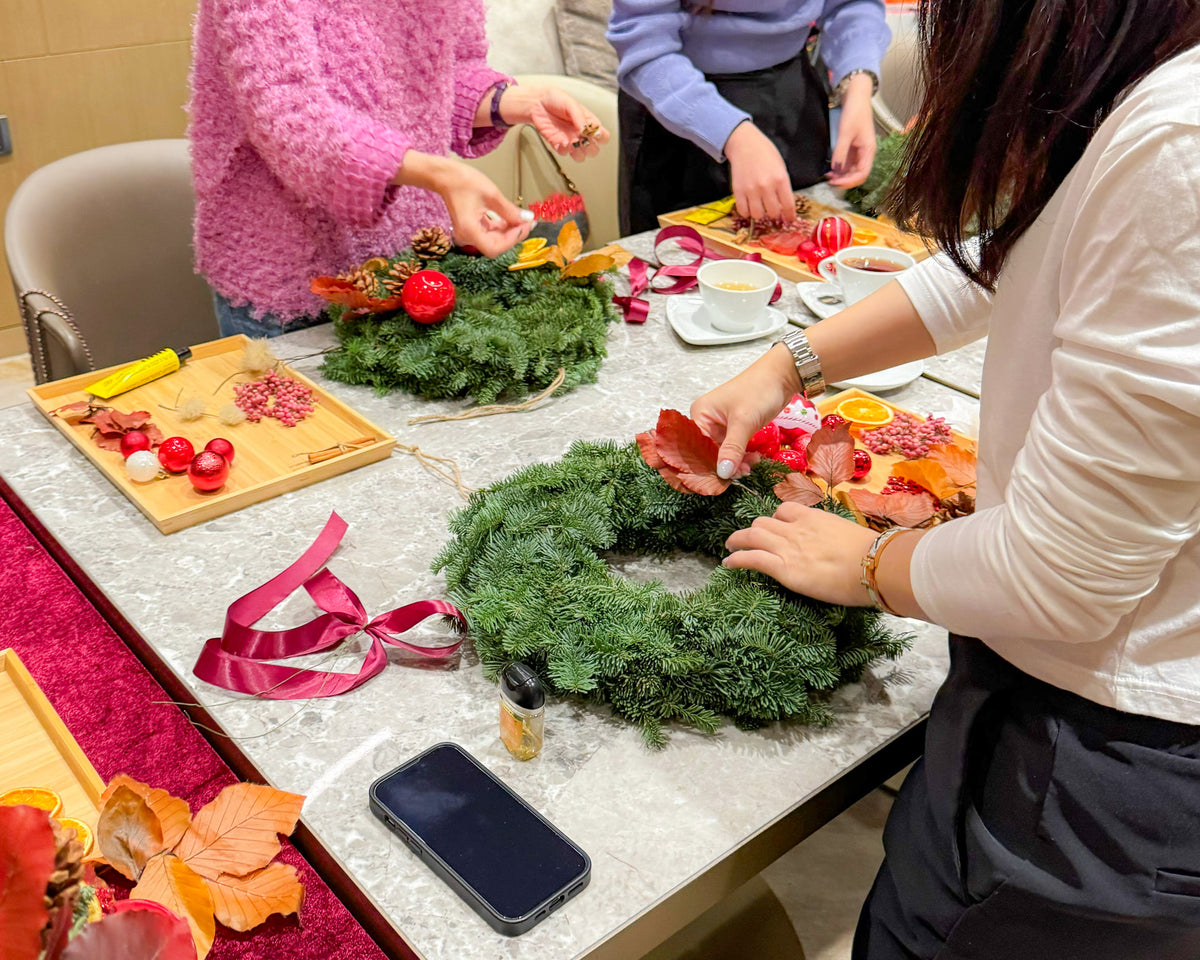
Let Hope Bloom’s flower arrangement classes begin every lesson with these three principles: first, understand the logic of proportion and layering, then move on to colour coordination, and finally create your own arrangement step by step. We teach not only techniques, but also how to assess volume and space through a florist’s eyes.
The classes are held in a Grade A office building studio in Kwun Tong. We offer small-group classes taught in English, Mandarin, and Cantonese. Beginners with no prior experience are welcome, and you will turn theory into creations made with your own hands.